Toy Gamification — From bubble toy to interactive game system
Context
Traditional bubble toys and machines are designed for passive play. They generate random bubbles with no feedback, no progression, and limited engagement—especially across different age groups and social contexts.
The opportunity was to transform a familiar, low-tech object into an interactive game system capable of engaging children, families, and adults alike.
Challenge
Existing bubble machines lacked:
-
controlled bubble generation
-
interactivity
-
measurable feedback
The challenge was to gamify a physical interaction without overcomplicating the object or excluding non-digital users—while keeping the experience intuitive, scalable, and commercially viable.
Approach
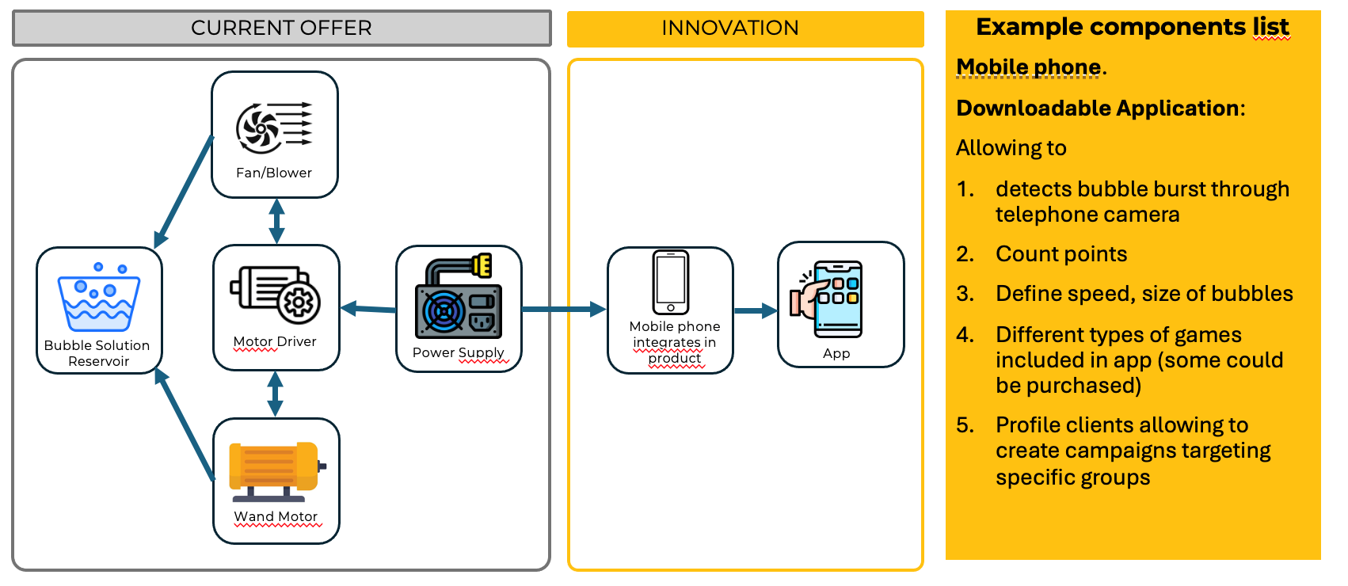
The project was conceived as a hybrid physical–digital system, combining hardware, interaction design, and a mobile application.
The concept centered on three elements:
-
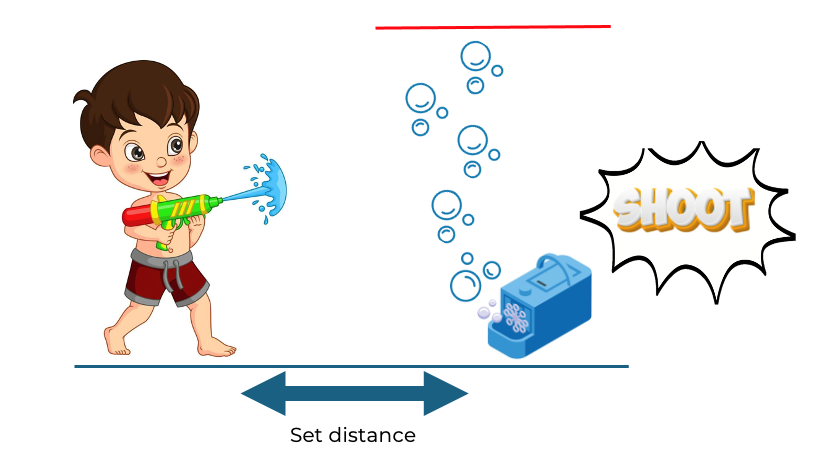
A bubble-generating unit capable of producing small, medium, and large bubbles, with controlled speed and direction
-
Player devices allowing users to interact physically by bursting bubbles
-
A mobile application translating physical actions into real-time game logic
Generative logic and computer vision were explored to enable bubble detection through a smartphone camera, turning ephemeral physical events into digital inputs.
System Design & Prototyping
The outcome was a modular kit composed of:
-
a central bubble-generating unit
-
two electric water blasters
-
a charging system and instruction set
-
a companion mobile application (Android and iOS)
The application enabled:
-
real-time bubble burst detection
-
point counting and score display
-
control over bubble size, speed, and game modes
-
multiple game types, with the possibility of additional content
-
player profiles and campaign logic for targeted experiences
Outcome
-
A complete play system, not just a toy
-
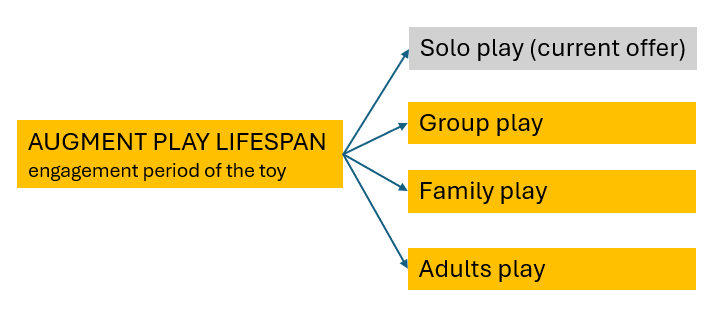
A scalable platform adaptable to different ages, group sizes, and use contexts
-
A clear framework for extending physical play through digital rules and feedback
The project demonstrated how simple physical interactions can be elevated into measurable, repeatable, and expandable game experiences—bridging analog play and digital engagement.